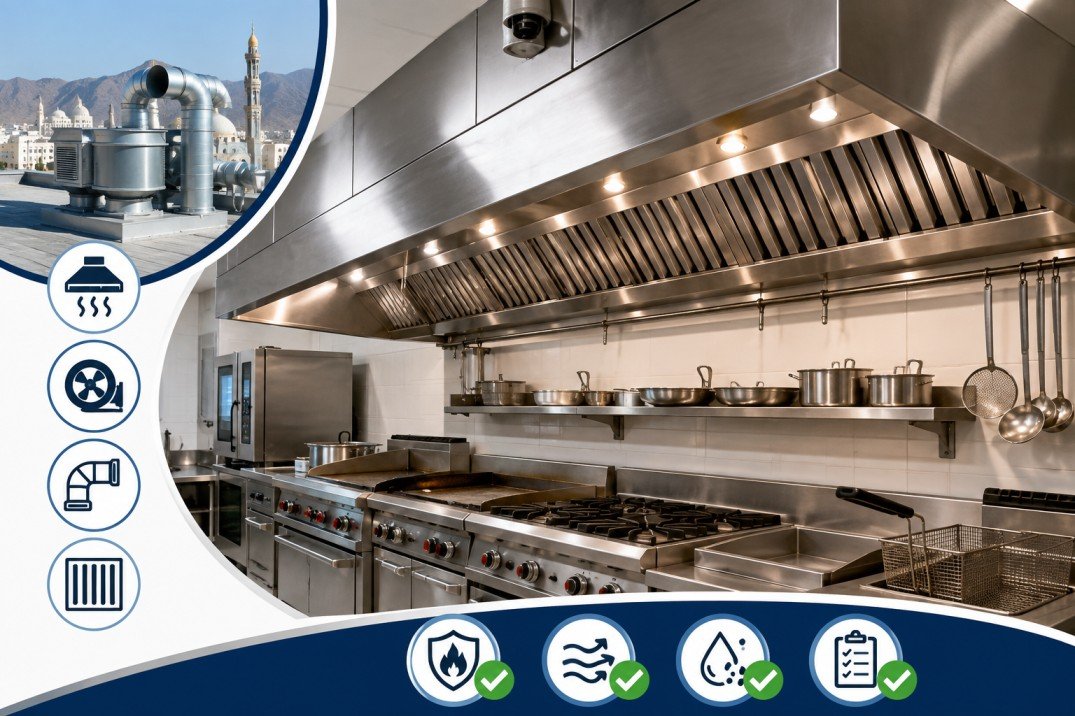
Kitchen Ventilation Systems Oman: A Complete Guide for Commercial Kitchens
A well-designed kitchen ventilation system is essential for every commercial kitchen in Oman. Restaurants, hotels, bakeries, cafés and catering facilities generate large amounts of heat, smoke, grease, steam and cooking odours. Without proper ventilation, these contaminants can affect indoor air quality, create uncomfortable working conditions and increase fire and maintenance risks.
A commercial kitchen ventilation system is designed to capture and remove these contaminants while maintaining a balanced and comfortable kitchen environment. The 2025 Oman Mechanical Code includes specific provisions for ventilation and commercial kitchen exhaust systems, including requirements covering hoods, exhaust equipment, ducts and makeup air. (Ministry of Housing and Urban Planning)
Why Kitchen Ventilation Is Important
Commercial cooking equipment can produce significant heat, grease and smoke, particularly during frying, grilling, roasting and high-temperature cooking. An effective ventilation system removes these pollutants at their source and helps prevent them from spreading throughout the kitchen.
Proper ventilation also helps maintain a more comfortable working environment for kitchen staff. By controlling heat, steam and odours, a good system can improve air quality and contribute to a cleaner and more efficient kitchen.
Ventilation is also closely connected with kitchen safety. Type I commercial hoods are required for appliances and cooking processes that produce grease or smoke, according to the Oman Mechanical Code. (Ministry of Housing and Urban Planning)
Main Components of a Commercial Kitchen Ventilation System
A complete kitchen ventilation system typically consists of several interconnected components. Understanding these components can help restaurant and hotel owners choose the right solution for their facility.
Exhaust hoods are installed above cooking equipment to capture heat, smoke, grease and vapours. Depending on the cooking equipment and kitchen layout, different hood designs can be used, including wall canopy, island canopy and backshelf hoods. (ICC Codes)
Exhaust fans and blowers move contaminated air through the duct system and discharge it safely outside the building. The capacity of the exhaust equipment needs to match the requirements of the hood and cooking appliances.
Ductwork provides a controlled path for exhaust air to travel from the hood to the discharge point. Proper duct design and installation are important for system performance and fire safety.
Grease filters help capture grease particles before they enter the exhaust ductwork. Regular cleaning and maintenance are important to keep the system operating efficiently.
Makeup air systems replace some of the air removed by the exhaust system. A properly balanced system helps prevent excessive negative pressure and supports effective ventilation. The Oman energy code also includes specific requirements related to replacement air for kitchen exhaust systems. (Ministry of Housing and Urban Planning)
Types of Commercial Kitchen Hoods
The right exhaust hood depends on the cooking equipment, kitchen layout and type of cooking operation.
Wall canopy hoods are commonly positioned against a wall above a cooking line. The wall can help improve capture efficiency by limiting airflow from behind the cooking equipment.
Island canopy hoods are installed over cooking equipment that is positioned away from walls. They can be more sensitive to cross-drafts and may require greater exhaust airflow than comparable wall-mounted hoods. (ICC Codes)
Backshelf hoods are positioned closer to the cooking equipment and can be suitable for particular kitchen layouts and equipment configurations.
For kitchens producing grease and smoke, Type I hoods are particularly important. Type II hoods are generally used for applications involving steam, heat, odours and similar contaminants where a grease hood is not required. (ICC Codes)
How to Choose the Right Kitchen Ventilation System in Oman
Choosing a ventilation system should begin with an assessment of the kitchen rather than simply selecting an exhaust fan or hood based on size.
Consider the type and number of cooking appliances, because a kitchen using fryers, grills and heavy-duty cooking equipment will have different ventilation requirements from a café with light cooking.
The kitchen layout is another important factor. The location of cooking equipment, walls, doors, windows and other airflow sources can affect the performance of an exhaust hood.
You should also consider hood size, exhaust airflow, duct routing, exhaust fan capacity and makeup air requirements. These elements need to work together as one system rather than being selected independently.
For commercial projects in Oman, ventilation design should also take applicable building and safety requirements into account. The Oman Mechanical Code specifically addresses commercial kitchen exhaust systems and their associated components. (Ministry of Housing and Urban Planning)
Kitchen Ventilation and Oman’s Climate
Oman’s hot climate makes effective commercial kitchen ventilation especially important. Kitchens can become significantly hotter when ovens, ranges, grills, fryers and other cooking equipment operate continuously.
An efficient ventilation system helps remove excess heat and contaminated air while supporting a more comfortable working environment. However, ventilation should be properly balanced with air-conditioning and makeup air systems. Simply increasing exhaust capacity without considering replacement air can create pressure and airflow problems.
For this reason, commercial kitchens should be designed with ventilation, air conditioning and makeup air requirements considered together.
Importance of Regular Maintenance
Even a high-quality kitchen ventilation system can lose efficiency without regular maintenance. Grease filters, exhaust hoods, ducts and fans should be inspected and cleaned according to the equipment manufacturer’s recommendations and applicable requirements.
Accumulated grease can reduce airflow and increase maintenance and fire risks. Regular cleaning also helps maintain hygiene and allows potential problems with fans, filters, ducts and other components to be identified early.
Businesses should therefore include commercial kitchen exhaust cleaning and ventilation maintenance as part of their regular facility management routine.
Why Choose the Right Commercial Kitchen Equipment Supplier?
A ventilation system should be considered as part of the complete commercial kitchen rather than as an isolated piece of equipment. The right supplier can help businesses evaluate their cooking equipment, kitchen layout, ventilation requirements and fabrication needs.
For restaurants, hotels, bakeries, cafés and catering facilities in Oman, investing in a properly designed ventilation system can improve kitchen comfort, airflow, cleanliness and operational efficiency.
With the right combination of commercial kitchen exhaust hoods, exhaust systems, ventilation equipment and custom fabrication, businesses can create a safer and more efficient professional kitchen environment.
FAQs
1. What is a commercial kitchen ventilation system?
A commercial kitchen ventilation system removes heat, smoke, grease, steam, odours and other cooking contaminants from a professional kitchen. It generally includes exhaust hoods, filters, ducts, exhaust fans and makeup air components.
2. Why is kitchen ventilation important in Oman?
Kitchen ventilation is particularly important in Oman because commercial cooking generates substantial heat and contaminants, while the local climate can already create high indoor temperatures. Proper ventilation helps control heat, smoke, grease and odours and supports a more comfortable kitchen environment.
3. What type of exhaust hood is best for a restaurant?
The appropriate hood depends on the cooking equipment, cooking process, kitchen layout and required exhaust performance. Type I hoods are used for cooking appliances that produce grease or smoke, while Type II hoods are generally used for heat, steam and similar applications. (Ministry of Housing and Urban Planning)
4. How often should commercial kitchen exhaust systems be cleaned?
Cleaning frequency depends on the type and intensity of cooking, the amount of grease produced and the operating schedule. Filters, hoods and other accessible components should be maintained regularly, while deeper cleaning should follow applicable safety requirements and equipment recommendations.
5. How can I choose the right kitchen ventilation system?
Start by evaluating your cooking equipment, kitchen size and layout, cooking volume, hood type, exhaust airflow, ductwork and makeup air requirements. Working with an experienced commercial kitchen equipment and ventilation supplier can help ensure the system is appropriately designed for your kitchen.
Looking for commercial kitchen ventilation solutions in Oman? A properly planned system can help your restaurant, hotel, bakery or catering facility achieve better airflow, improved kitchen comfort and safer operations.